

CLICK HERE for the table of contents and links to full text. Subversive Comics This issue takes a wandering journey through the increasingly broad and complex world of comics. At best, this journal issue can only reveal a corner of this world, because the world is wide-ranging and constantly expanding. But our contributors to this issue, who include comics script writers and artists and teachers of various types, not to mention a famed feminist art critic and an investigator into conjunctures between African American traditions, literature, and comics, come mainly from the younger generation of comics scholars. The contributions to […]

CLICK HERE for the table of contents and links to full text. The Rest is Political: Radical Histories of Repose This issue of Radical History Review explores how individuals and communities have shaped history through states of repose, slumber, and dreaming, as it assembles a history of the present through the study of the sites of and rights to rest in the past. Features Hermann von Hesse traces how meanings of home as resting place for living and ancestral kin changed under new commercial relations on Africa’s Gold Coast in the early nineteenth century. Khal Schneider shows how Indigenous Pomo-speakers […]

CLICK HERE for the table of contents and links to full text. This issue of Radical History Review offers a collection of essays and reflections that grapple with the meaning of decolonization in a world riddled with imperial projects. Features Amit Bhagat and Rebecca Waxman examine the anticolonial uprising and colonial repression that took place in Chimur (India) in August 1942 to ask questions about why certain events are left out of histories of decolonization in India. Benjamin Kapron uses the concept of survivance to explore decolonial other-than-human opposition to the Trent-Severn Waterway. Bright Gyamfi sheds light on the life […]

CLICK HERE for the table of contents and links to full text. This issue of Radical History Review revisits the intersection of public history—long a concern of the journal–and the burgeoning field of critical memory studies. Contributors explore contested terrain where radical “memory activists,” populist nationalists, and self-proclaimed preservers of tradition have battled to place their stamp on public narratives about the past. Articles Jamille Pinheiro Días and Lúcia Sá expose Sao Paulo’s Bandeirantes monument’s links to colonial trauma and anti-Indigenous racism in Brazil. Claire Brennan and Ana Stevenson explore local efforts to take down statues of Capt. James Cook—commercial […]

CLICK HERE for the table of contents and links to full text. This issue interrogates the power and the persistence of the concept of economic miracle. Originally associated with the seemingly miraculous postwar recoveries of Germany and Japan, the economic miracle has become a fixture in economic policy-making, especially in the global south where the longing for a miraculous economic transformation has served as a justification for repressive regimes and intensified inequality. Roundtable Miracles and Mirages: Quinn Slobodian tracks the globalization of the miracle concept; Franco Barchiesi discusses how colonial tropes of Blackness produce distinct meanings for economic miracles in […]

CLICK HERE for the table of contents and links to full text. This issue of Radical History Review examines periodicals and other print ephemera—newspapers, literary journals, magazines, pamphlets—as crucial sites of Left, anti-imperial, and anti-colonial critical production. Revolutionary papers generated oppositional networks, critical spaces, and alternative artistic practices, linking local concerns to global revolutionary praxis. Counter-Institutions, Counter-Politics and Counter-Cultures Mahvish Ahmad, Koni Benson, and Hana Morgenstern propose a framework for engaging anticolonial periodicals. Beijing Workers’ Writings in the 1989 Tiananmen Movement Promise Li shows how Chinese workers’ handbills and posters translated economistic demands into political self-organization. Black Internationalism, Print Culture, and […]

CLICK HERE for the table of contents and links to full text. This issue of Radical History Review assembles writings from scholars, sex workers, and activists, each of whom interrogates a “troubled term” and its place in the history of prostitution. Genealogies: This section includes scholarly articles that explore a particular troubled term. Judith R. Walkowitz explores the genealogy of sex work and its embrace among UK prostitute rights activists. Elisa Camiscioli and Eva Payne trace the shifting meanings of (male) demand across national spaces, international accords, and two centuries. Christina Carney unpacks the moral panic over white slavery and […]

CLICK HERE for the table of contents and links to full text. This issue of Radical History Review explores how feminists have conceptualized, negotiated, and challenged structures of state violence to create sites of liberation and care within harmful and neglectful institutions. Features Emily Hobson and Mónica Jiménez demonstrate that radical care is possible from within carceral confinement. Kaysha Corinealdi, Romina Green Rioja, and Spencer Beswick document dual-pronged activisms that build alternatives to the state. Erica Edwards and Randi Gill-Sadler and Heather Berg analyze the historical and cultural resources feminists have mobilized to foster community defense. Interventions India Thusi documents […]

CLICK HERE for the table of contents and links to full text. The Political Lives of Infrastructure Contributions to this issue of Radical History Review seek to expand taken-for-granted understandings of how infrastructure has historically served as the spatial backbone for building and reproducing various imperial, settler colonial, and racial capitalist regimes of power and rule. They explore how historically oriented scholarship can foreground radical politics organized around and through infrastructure across multiple spatial and temporal scales. Roundtable I Deborah Cowen and Laleh Khalili have a lively conversation about infrastructure’s radical possibilities and highlight the forms of labor, protest, and […]
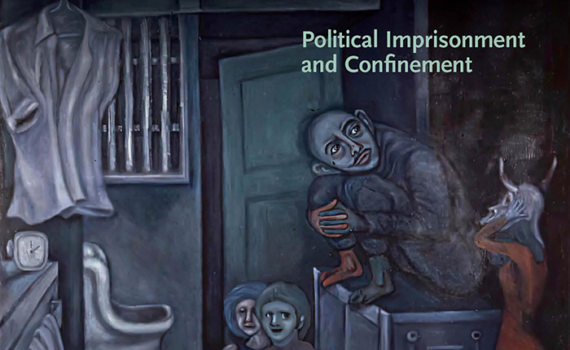
CLICK HERE for the table of contents and links to full text. Political Imprisonments and Confinements This issue of Radical History Review explores states’ uses of criminalization and imprisonment to silence critical voices and maintain structures of authority. Features: Orisami Burton examines the US government’s counterinsurgency strategy against Black prisoners in the United States in the 1970s. Kathleen Alfin details how the US Army encamped Liberian women for the sexual satisfaction of male GIs during the Second World War. Islamist forces in Turkey, Rustem Ertug Altinay argues, made an icon of a rightwing nationalist in order to oppose secular Turks. […]

CLICK HERE for the table of contents and links to full text. Alternatives to the Anthropocene This issue of Radical History Review examines the heterogeneous imaginaries and social movements struggling against the social and environmental destruction of the Anthropocene, the notion of a homogenous humanity driving the geological era of climate change. Features Matthew Shutzer and Arpitah Kodiveri examine extractive economies and the origins of subterranean sovereignty in the colonization of the Indian subcontinent. Adam Quinn offers a transnational intellectual history of anarchist environmentalist politics in the late 19th and early 20th centuries. Christian Høgsbjerg traces a thread of environmental […]

CLICK HERE for the table of contents and links to full text. This issue of Radical History Review interrogates and reimagines the “Afropolitan,” the term coined by writer Taiye Selasi and popularized by theorist Achille Mbembe. Our contributors creatively reframe the Afropolitan as part of a broader history of global networks, pasts, and futures. Feature Essays Elizabeth Fretwell examines and contextualizes the Afropolitanism of elite sartorial culture of precolonial Dahomey. Ndubueze Mbah theorizes the “rebellious mobilities” of nineteenth-century Liberated Africans who returned to Nigeria from Sierra Leone. Reflections on the Afropolitan Antonia Carcelén-Estrada uses gendered absences in Sánchez-Gallque’s iconic Los […]